

Complete Guide to Air Plant Care

Updated: 31 minutes ago
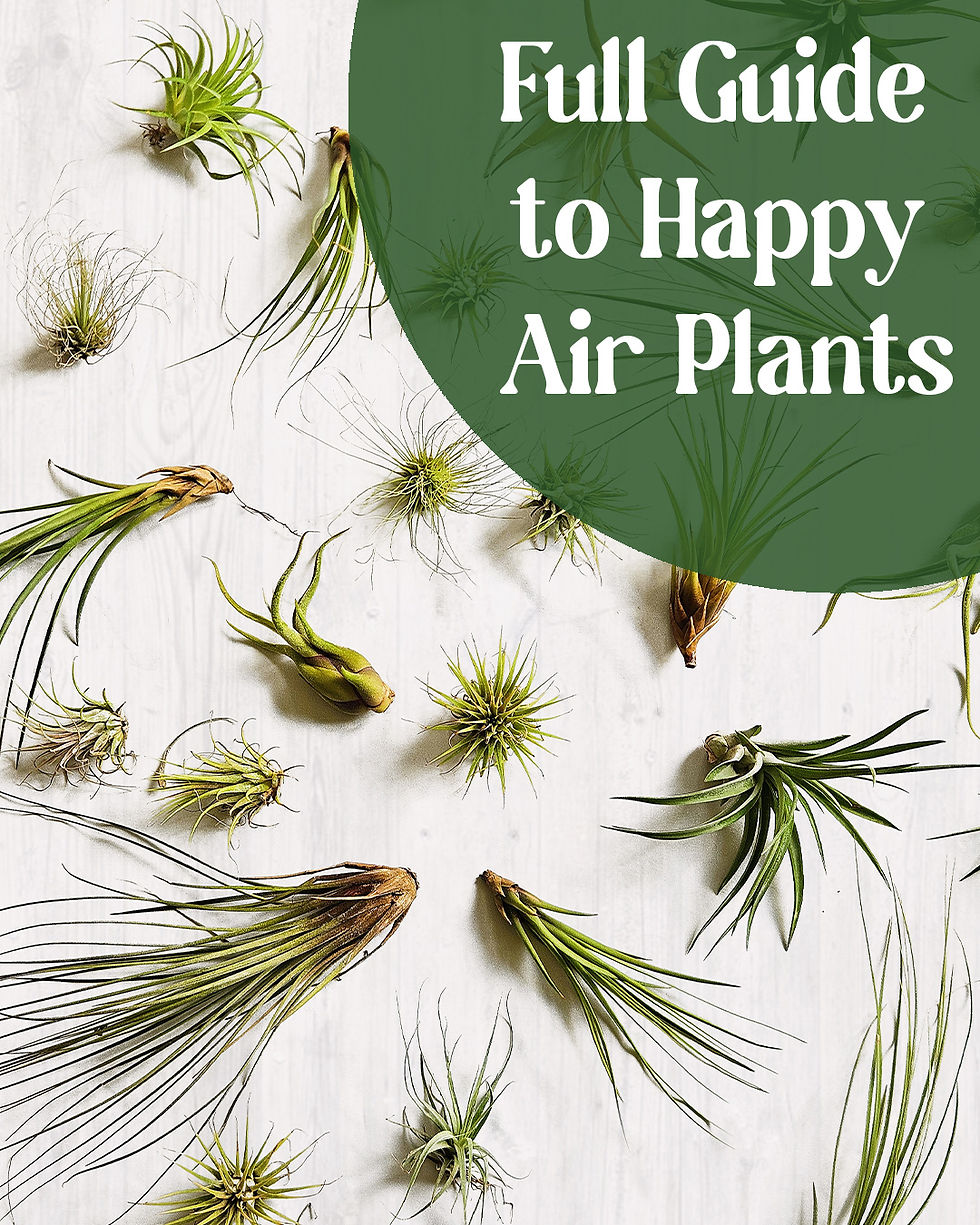
Air plants (also known as Tillandsias) are the quirky, no-soil-needed wonders of the plant world. Whether you've got one or two – or five! – hanging around your home, you might be wondering how to keep them happy and healthy.
The good news? They're relatively easy to care for once you understand what they need.
Unlike most houseplants, air plants don't grow in soil. Instead, they absorb water and nutrients through tiny structures on their leaves. This makes them perfect for creative displays, from hanging glass globes to driftwood arrangements and decorative holders.
In this guide, we'll cover everything you need to know about caring for your air plant, from watering and positioning to common problems and new growth.
If you're looking for a quick reminder of the essentials, you can also visit our Quick Guide to Air Plant Care
Contents
Light & Positioning

Getting the right amount of light is one of the most important parts of air plant care.
Air plants generally thrive in bright, indirect natural light. A bright windowsill or a well-lit room is a great place to start.
An east-facing window can be particularly suitable, as it often provides gentler morning sunshine. West-facing windows can also work well, although you may need to protect your plant from strong afternoon sun, especially during summer.
Too little light can leave your air plant struggling to grow, while too much intense direct sunlight can dry out or scorch its leaves.
Where should I put my air plant?
Air plants are wonderfully versatile and can be displayed in lots of different ways.
You could try:
A hanging glass globe.
A decorative ceramic or terracotta holder.
A piece of driftwood or bark.
A bright shelf or windowsill.
An open terrarium-style display with plenty of airflow.
Whatever display you choose, make sure your plant isn't trapped in a dark, damp or poorly ventilated space.
Remember: air plants don't need soil, but they do need light, water and fresh air!
In Summary
Bright, indirect natural light is best.
Some gentle direct sunshine may be suitable, depending on the variety and conditions.
Avoid dark corners and intense summer sun.
Choose a display that allows air to circulate freely.
Watering Air Plants

Watering is probably the most important part of keeping your air plant healthy.
Although air plants absorb moisture through their leaves, they still need regular watering. In most homes, soaking is the best way to provide a thorough drink.
How often should I water?
As a starting point, soak your air plant for around 20–30 minutes once a week.
However, this isn't a strict rule. The ideal frequency depends on the type of air plant, the temperature, light levels, humidity and airflow in your home.
Your plant may need more frequent watering during warm, dry weather, while cooler conditions may mean it needs less.
Rather than following a rigid schedule, keep an eye on how your plant looks and how quickly it dries after watering.
How to soak your air plant
Fill a bowl with water. Room-temperature rainwater is a good choice. Suitable tap water can also be used; avoid softened water.
Submerge your plant. Leave it in the water for around 20–30 minutes.
Shake off excess water. Gently turn the plant to remove water trapped between its leaves.
Let it dry completely. Place it upside down or on its side somewhere with good airflow.
Return it to its display. Only put it back once it's completely dry, ideally within around four hours.
If your air plant is flowering, take extra care not to damage the flower or leave it submerged.
Why is drying so important?
Air plants need moisture, but they don't like remaining wet for long periods.
Water can collect between the leaves, particularly around the base of the plant. If it stays there, the plant may begin to rot.
This is especially important if you're displaying your plant in a glass globe, shell or another decorative container where airflow might be limited.
Never return a wet air plant to an enclosed or poorly ventilated display.
Can I mist my air plant?
Misting can be useful as an additional source of moisture, particularly in a warm, dry home. However, a light mist alone may not provide enough water to keep your plant hydrated.
For most air plants, regular soaking should remain your main watering method.
What water should I use?
Rainwater is a good option because it generally contains fewer dissolved minerals than tap water. If using tap water, avoid water that has been softened with a salt-based water softener.
If your plant develops persistent brown tips or appears unhealthy despite regular watering, water quality may be one factor worth checking.
In Summary
Soak for around 20–30 minutes once a week as a starting point.
Adjust watering according to your home and the plant's needs.
Shake off excess water after soaking.
Let the plant dry completely within a few hours.
Use misting as a supplement rather than a replacement for soaking.
Airflow & Temperature

Air plants enjoy fresh air and good circulation. This helps them dry properly after watering and reduces the risk of rot.
A room with normal air movement is generally suitable. You don't need a fan running constantly, but avoid leaving your plant somewhere enclosed and stuffy.
Bathrooms can work well if they're bright and ventilated, although a dark, permanently damp bathroom isn't ideal.
What temperature do air plants like?
Many commonly sold air plants do well in typical indoor temperatures, broadly around 10–30°C, although individual varieties can differ.
They generally prefer stable conditions rather than sudden temperature changes.
Keep your plant away from:
Cold draughts and frost.
Very hot radiators.
Heat sources that dry the leaves rapidly.
Enclosed displays that become excessively hot in direct sunshine.
In the UK, keeping air plants indoors throughout the year is usually the simplest option.
In Summary
Good airflow helps your plant dry properly.
Avoid permanently damp or stuffy locations.
Protect your air plant from frost.
Keep it away from radiators and intense heat.
Display Ideas

One of the best things about air plants is how many different ways you can display them.
Because they don't need compost, you can get creative without worrying about finding a traditional plant pot.
Hanging globes
Glass globes create a lovely floating effect and are ideal for modern interiors.
Choose a globe with an opening that allows you to remove your plant easily for watering and drying. Avoid leaving your air plant inside a closed, humid container.
Decorative holders
Small ceramic, terracotta and other decorative holders are a simple way to show off your plant.
Make sure the holder doesn't trap water around the base, and remove the plant before soaking it.
Driftwood and natural displays
Air plants can look beautiful arranged on driftwood, bark or other suitable natural materials.
If you're attaching your plant to a display, avoid covering too much of its base or damaging the leaves. It should still be possible to remove it for watering and allow it to dry properly.
A quick note about glue
If you'd like to attach an air plant permanently to a decorative item, be careful with adhesives. Some can damage the plant or prevent you from removing it for watering.
A removable or gently secured display is usually the most practical option.
The golden rule: choose a display that looks good but still allows you to water, dry and inspect your plant easily.
Common Air Plant Problems
Air plants are generally easy to look after, but changes in their appearance can sometimes tell you that something needs adjusting.
Brown or dry leaf tips
A few dry tips aren't necessarily a reason to worry. However, widespread browning can be associated with insufficient watering, very dry conditions, intense sunlight or water quality.
Check your watering routine, light levels and the condition of your plant before making changes.
Curled or unusually dry leaves
Some air plants naturally have curled leaves, so this isn't always a sign of trouble.
If the leaves are becoming more curled than usual and the plant looks dry, it may need more water. Check whether your soaking routine is appropriate for the conditions in your home.
Soft or mushy leaves
Soft, mushy or darkening leaves, particularly around the base, can indicate rot.
This can happen if water remains trapped between the leaves or the plant is kept wet for too long.
Remove it from any enclosed display, allow it to dry in a well-ventilated spot and check for damaged tissue. If the base is badly affected, recovery may be difficult.
A plant that looks pale or scorched
If your air plant has pale, bleached or scorched patches, it may be receiving too much intense direct sunlight.
Move it somewhere with bright, indirect light and avoid exposing it suddenly to strong sunshine.
Pests
Air plants can occasionally attract pests, although problems are less common when they're kept in suitable conditions.
Inspect the leaves and base from time to time. If you spot insects, separate the affected plant from other plants and identify the pest before choosing a treatment.
In Summary
A few dry tips may be normal.
Check watering if the leaves become unusually dry or curled.
Soft, mushy tissue can indicate rot.
Scorched patches may mean too much direct sunlight.
Good airflow and suitable watering help prevent many problems.
Flowers & Baby Plants
With the right care, an air plant may eventually reward you with a colourful flower. Depending on the variety, these can be surprisingly bright and striking.
Flowering is a natural part of the plant's life cycle. After flowering, many Tillandsias produce little baby plants known as pups.
These usually appear around the base of the parent plant.
What should I do with the pups?
You can leave the pups attached to the parent plant, allowing them to grow into a cluster, or separate them once they're large enough to handle.
As a general guide, wait until a pup is around one-third to one-half the size of the parent before considering separation.
Gently separate it when it comes away readily, taking care not to damage the base. If it's firmly attached, give it more time to grow.
Each pup can eventually become its own air plant, so one little plant can turn into a lovely collection!
Does the parent plant die after flowering?
Many air plants gradually decline after flowering while producing pups. This is a normal part of their life cycle, rather than a sign that you've done anything wrong.
Continue caring for the parent plant and its pups while they remain healthy.
Seasonal Air Plant Care
Your air plant's needs may change throughout the year as temperatures, daylight and humidity change.
Spring & Summer
Warmer weather and stronger light can cause your plant to dry out more quickly.
Check it regularly and adjust watering if necessary. Keep it out of intense direct sunshine and make sure it dries fully after soaking.
Autumn & Winter
Indoor heating can create warm, dry conditions, while shorter days may mean your plant receives less light.
Try to keep it somewhere bright, away from radiators and cold draughts. You may need to adjust your watering routine depending on how quickly the plant dries.
Don't automatically reduce watering just because it's winter. The aim is to provide enough moisture for your plant to stay healthy while ensuring it dries properly between waterings.
Final Thoughts: Keep It Simple

Air plants may look a little unusual, but they're not as complicated as they seem.
Give yours bright, indirect light, regular watering, plenty of airflow and time to dry properly after soaking. With those basics in place, you'll have a much better chance of keeping it happy and healthy.
And remember, every home is different. Pay attention to your plant and adjust its care as needed rather than following a strict schedule.
A little care, a little patience and a good soak can go a long way! 🌿
Looking for your next leafy little gift?
From individual air plants to decorative holders and gift-ready arrangements, discover more ways to bring a little greenery into your home.
Looking for a quick reminder of the essentials?
Read our Quick Guide to Air Plant Care


Comments